
What is it?
Regenerative agriculture might not be recognized as a universal term,
but it is often used to decribe the practice of promoting the soil
health. This is done by
restoring the soil's organic carbon.
The world’s soils store several times the amount carbon as the
atmosphere, acting as a natural “carbon sink.” Globally, soil carbon
stocks have been declining as a result of factors such as
the conversion of native landscapes to croplands and
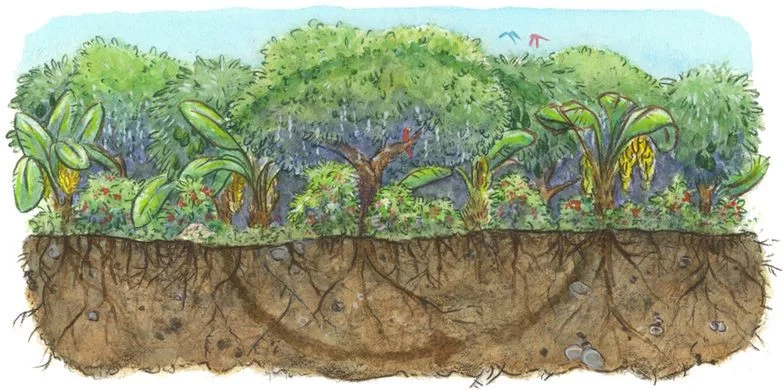
overgrazing. One goal of regenerative practices is to use some of the carbon that
plants have absorbed from the atmosphere to help restore soil carbon.
(source)
Why we need better agriculture
Our agricultural system as currently constructed
will not allow for the sustainable scaling of food production
to match the demands of a rapidly growing population.
With
developing superpowers such as China,
India and Brazil gaining wealth, food consumption per person also will
start to increase, maximizing strain on our food production system. The
total emissions of agriculture when including the totality of the system
(including transportation, livestock, farming techniques, pesticides,
fertilizers, etc) is
the single biggest contributor to global warming, with livestock alone contributing 18 to 20 percent of global annual
carbon emissions (Hawken, et al. 2017).
(source)

